
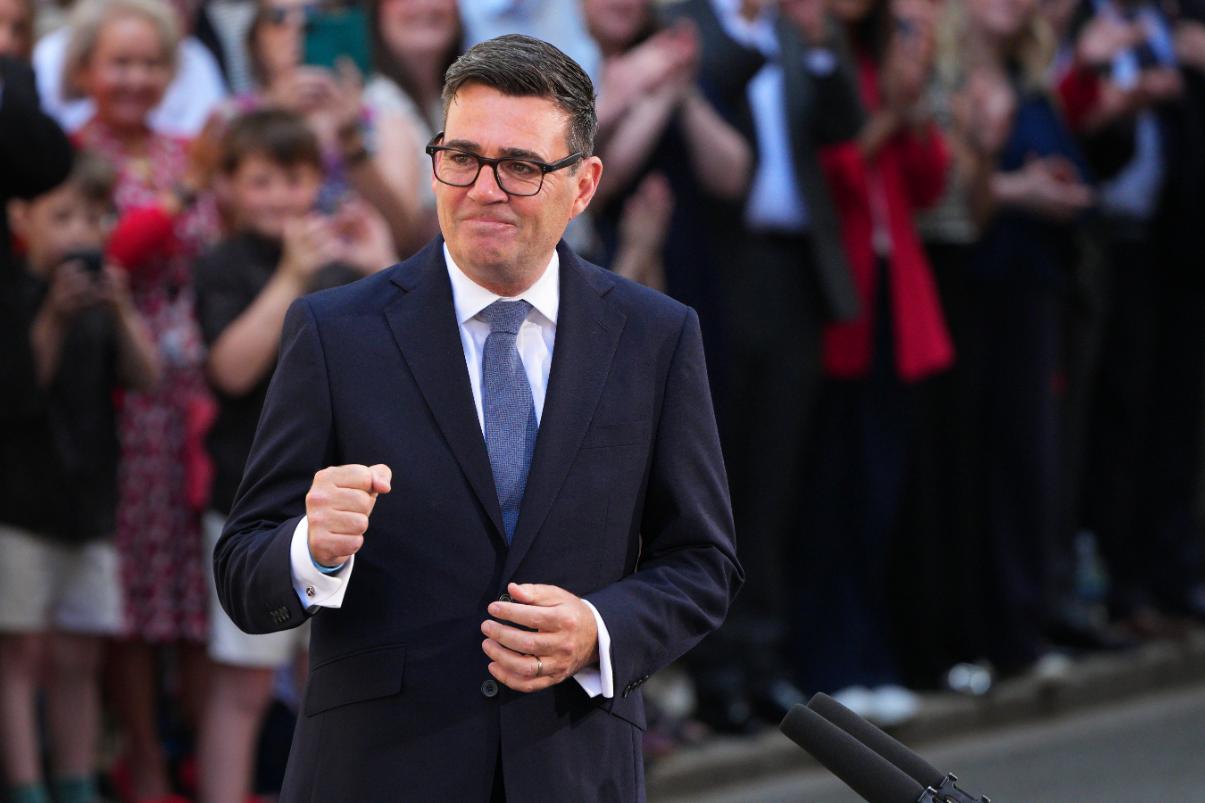
The British new Prime Minister’s immediate battle will be domestic. But Labour’s long-standing relationship with Africa may still shape the wider foreign-policy agenda.
Andy Burnham enters Downing Street with one overriding political imperative: to fix Britain at home. His mandate is not primarily about Africa, nor about foreign policy. It is rooted in domestic frustration — housing shortages, regional inequality, industrial decline, public-service pressure. Understandably, when taking office he said: “I know people at home are fed up with politics. I hear you, and I want to be honest with you, we have not been good enough and we need to be better.”
Yet, Britain’s relationship with Africa cannot be treated as a footnote. For Labour, engagement with the continent has often been framed around development, partnership and social justice. Today, however, African leaders are asking for something more ambitious: not charity, but economic sovereignty, industrial capacity and a fairer place in the global economy.
A Prime Minister defined by domestic urgency
Burnham’s first message from Downing Street was designed to signal this urgency. His pledge to end rough sleeping at the earliest opportunity was not merely a social-policy announcement; it was a political statement about the kind of government he wants to lead. By presenting homelessness as a problem that can be solved by political will, he positioned himself as a prime minister impatient and focused on practical intervention.
That instinct will shape his early agenda. Burnham’s politics has always been grounded in place: communities, transport, housing, skills and local identity. As Prime Minister, he is likely to translate that philosophy into a national programme built around regional devolution, council housebuilding and a more active industrial strategy.
The Promise and Risk of “Manchesterism”
The central question is whether Burnham’s record in Greater Manchester can be scaled up to the whole of the United Kingdom. His supporters will argue that the country needs exactly this kind of politics: local leadership backed by national ambition. His critics will ask whether “Manchesterism” can survive the pressures of Westminster, the Treasury and a pressurised national economy.
Burnham’s answer is a 10-year mission to reindustrialise Britain. That means strengthening domestic production in sectors seen as strategically vital, including defence, steel, energy and farming. It also means giving local mayors a greater role in delivering housing, transport and technical skills. This should be a plan for his tenure: He said:” Later this year, I will bring forward a new plan for Britain, a 10-year plan, laying out a path from where we are now to where I believe we all want Britain to be.”
The Fiscal Wall
The difficulty is that ambition will collide quickly with budget. Tight fiscal rules, limited borrowing space and an existing shortfall in the defence budget will restrict how far and how fast Burnham can move. A government committed to rebuilding communities will still have to decide what it can afford, what it must postpone and what it is willing to challenge.
Where Africa Fits
For Africa, the implications are more complex. Burnham’s first priority will not be to redesign Britain’s Africa policy. But if Labour is serious about partnership, it will need to move beyond familiar language about aid and development. African governments are increasingly focused on industrialisation, value addition, energy security, food systems and fairer trade. These are not separate from Britain’s domestic agenda; they mirror the same questions of sovereignty, production and economic resilience.
That is where Burnham’s domestic vision could become relevant internationally. A Britain seeking to rebuild its own industrial base may find common ground with African countries seeking to strengthen theirs. The challenge will be to turn that overlap into policy — through investment, skills partnerships, manufacturing cooperation and a trade agenda that respects African priorities. Many UK international NGOs welcome the nomination of Kirsty McNeill as the new Minister of State for Development and Africa, like OXFAM, a leading humanitarian and Development NGO. This organisation said:” The UK must do things differently to maintain credibility on the world stage, build resilience to climate shocks, and play a leading role in tackling poverty, inequality and conflict. We hope the Minister will champion the need to restore the development budget to 0.7%, and, crucially, ensure UK development policy prioritises the poorest.”
A former aid campaigner with Save the Children UK, Kirsty McNeill, the new minister for Africa, will be judged on how effectively she can continue to champion Africa’s cause amid the current political and economic constraints.
UK bilateral assistance to Africa cut.
With just four days left before his final exit from Downing Street on July 20, former Prime Minister Keir Starmer put before the Parliament a sweeping plan to shrink Britain’s overseas aid budget—one that could dramatically reshape the UK’s development footprint across Africa. Under the proposal, nine long-standing African partners, including Ghana, Kenya, Malawi, Tanzania, and Mozambique, would see their bilateral aid ties all but dismantled or cut to £5 million or less. Only Sudan’s aid programme has been fully protected in Africa. The move is part of a broader push to reduce aid spending from 0.5% to 0.3% of Gross National Income by 2029. UK bilateral assistance to African countries is now down from £1.6 billion to just under £700 million.
Romilly Greenhill, CEO of Non-governmental organisation (NGO) network Bond, agreed that the incoming Labour government should “recognise the role of development building a safer, equal and more stable world”, adding that they should rule out any further aid cuts”.
Over the past decade, Britain has hosted at 10 Downing Street, six different prime ministers, each largely consumed by domestic crises. But for major economies such as the UK, the demands of the global stage cannot be ignored. Multilateralism still matters, and Africa—widely seen as a continent of immense future potential—is becoming an increasingly contested arena for international partnerships. Globally players are competing to offer the most compelling deal: one that creates local jobs, supports domestic processing of raw materials, and helps drive industrial transformation. Andy Burnham and his cabinet will have to confront that challenge as well.