
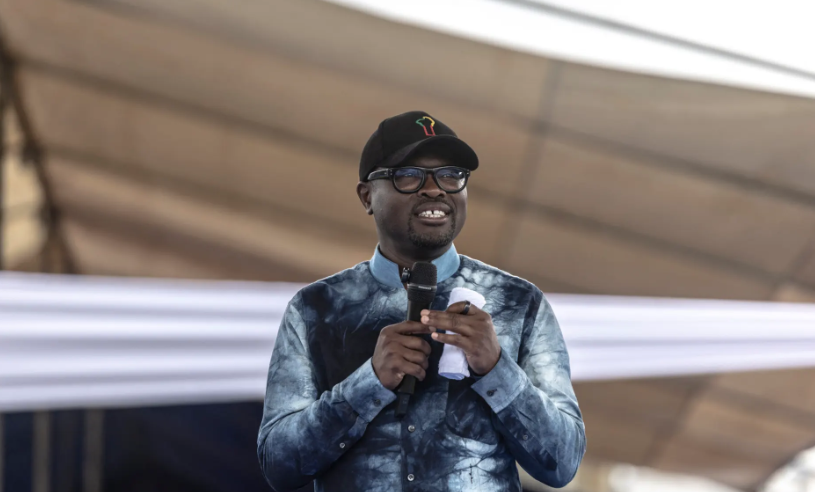
In Benin, the Independent National Electoral Commission (CENA) has confirmed, as anticipated, the victory of Romuald Wadagni, successor to outgoing President Patrice Talon, with 94.05% of the vote. The Constitutional Court is expected to officially validate the election in the coming days. Following the constitutional amendment in 2019, the presidential term now spans seven years, an increase from the previous five-year term.
A More Equitable Distribution of Economic Growth
On Sunday, April 12, nearly 8 million Beninese citizens participated in the electoral process, with the ticket of Romuald Wadagni and Mariam Chabi Talata achieving a decisive lead. As the former Minister of Economy and Finance, Mr. Wadagni articulated throughout his campaign a commitment to innovation across all sectors, while assuring the continuity of initiatives previously undertaken alongside Patrice Talon. His administration is expected to focus on two key areas: advancing a more equitable distribution of economic growth and addressing the security challenges facing northern Benin. With an annual economic growth rate exceeding 7% since 2024, Benin has emerged as the leading economy within the eight-member states of the West African Economic and Monetary Union (WAEMU) and among the continent’s top five performers in economic growth for 2025.
Outlined in his government programme—“Further Together”—Mr. Wadagni sets forth his vision: “When a people take ownership of their future, nothing can stand in their way.” He aims to strengthen the achievements of the Talon administration by pursuing bold structural reforms, promoting sustained investment, and leveraging growth in the industrial and services sectors.
Vision
The newly elected president has announced an ambitious plan to establish six territorial development hubs, aiming to ensure that all Beninese citizens, regardless of their location, have access to meaningful employment opportunities. This decentralisation strategy is designed to address youth employment needs, particularly for those who have yet to experience the tangible benefits of national economic growth. By prioritising locally driven development, the president intends for domestic raw materials to be processed on site through new industrial initiatives, thereby generating jobs for young people. This progressive approach aligns with similar efforts underway in other African countries, reinforcing Benin’s positive momentum. Mr. Wadagni is committed to swiftly demonstrating to his electorate that their choice is both strategic and advantageous.
Technological Innovation
The regional growth hubs will be underpinned by four key sectors: agriculture, tourism, industry, and innovation. The goal is to cultivate a robust network of small and medium-sized enterprises (SMEs) that will complement both private and international investment. Youth employment will be further promoted through technological innovation, which will be a central focus throughout the upcoming seven-year mandate. As the president has stated, “Benin will become an exporter of technological solutions. This is not a dream; it is a plan.” These initiatives are expected to expand opportunities for young Beninese and help reduce the social disparity that currently leaves approximately 70% of the active population underemployed.
Sub-regional Relations.
The approach of the new Beninese president toward neighbouring Sahel states will be closely scrutinised and assessed. Under former president Talon, these relationships were notably strained, hindering effective coordination and harmonisation in the fight against jihadist threats. During the election campaign, the new president’s statements appeared to reassure segments of the Beninese population: “If we do not increase collaboration with our neighbours, we risk simply shifting the problem. We must communicate and confront these challenges together.” The president has called for “renewed dialogue and the restoration of trust within the sub-region.” While this demonstrates his goodwill, he will ultimately be evaluated by the measures he implements to ease tensions and reinvigorate cooperation with all neighbouring countries.